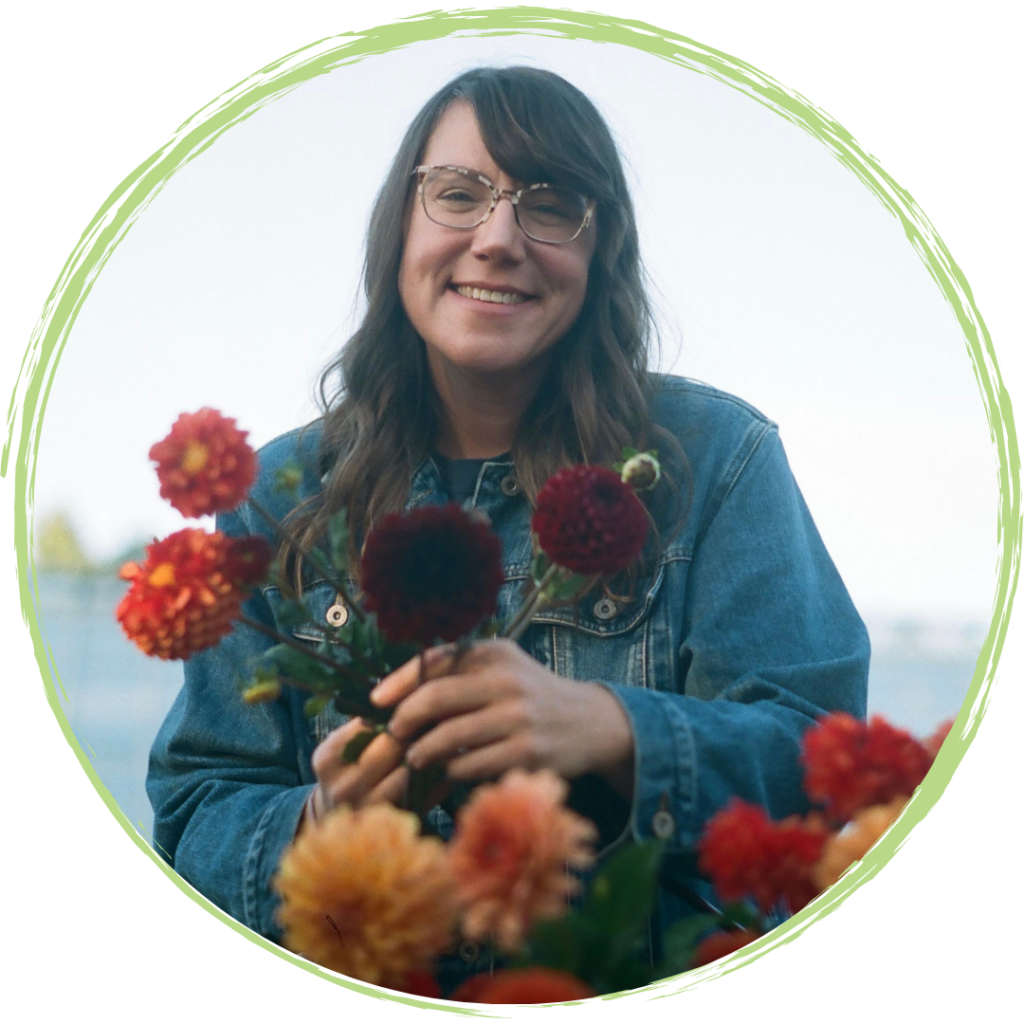
About Miranda S Duschack
My approach to coaching is farmer-led, research-based, and rooted in encouragement. Together we make regenerative decisions to decrease expenses, increase income, and inspire well-being. Sustainable agriculture my life’s work. I am co-founder of Urban Buds flower farm, est 2012, and ag educator since 2010. Currently, I am a farmer advisor at the Center for Regenerative Agriculture, University of MO. Granting writing and USDA resources are two of my favorite tools. Let’s talk!
Why Miranda wants to be a Knowledge Commons Farm Coach?
Knowledge Commons is a great forum to exchange advice without the weight of having to afford expensive consultations fees, navigate confusing institutional gate-keeping, or suffer agri-business sales pitches. Since our sessions are grant supported, I am able to meet with farmers from all walks of life, and in all stages of business development. That, is a privilege and a joy.
Miranda’s favorite thing to talk about when it comes to farming?
You! Agriculturalists are full of interesting ideas and innovations, observations and humor. During our coaching sessions the conversation will be focused on your goals, brainstorming solutions, addressing difficulties, and developing a practicle plan to keep you focused.
Coaching Areas
- Grant writing
- USDA resources
- Conservation ag techniques
- Cut-flower farming
- Business management
- Food Safety Modernization Act
On-site Visits
On-farm coaching is available to farmers within approximately a one-hour drive of Miranda’s farm, located in St Louis, MO. Travel distance and availability will be confirmed when scheduling your session.
“Known & Grown’s Knowledge Commons: An Innovative Approach to Traditional Knowledge-Sharing” is supported by the National Institute of Food and Agriculture, U.S. Department of Agriculture, under agreement number 2025-38640-45386 through the North Central Region SARE program under project number ONC26-192. USDA is an equal opportunity employer and service provider. Any opinions, findings, conclusions, or recommendations expressed in this publication are those of the author(s) and should not be construed to represent any official USDA or U.S. Government determination or policy.